
We partnered with Big Howl Productions on Albie’s Elevator, the PBS Kids puppet series they created. Big Howl brought the artistic direction. ITW translated it into a buildable world: the main elevator set, several characters, and a set of furniture pieces with integrated lighting. We fabricated the build and handled installation on-site across multiple seasons.
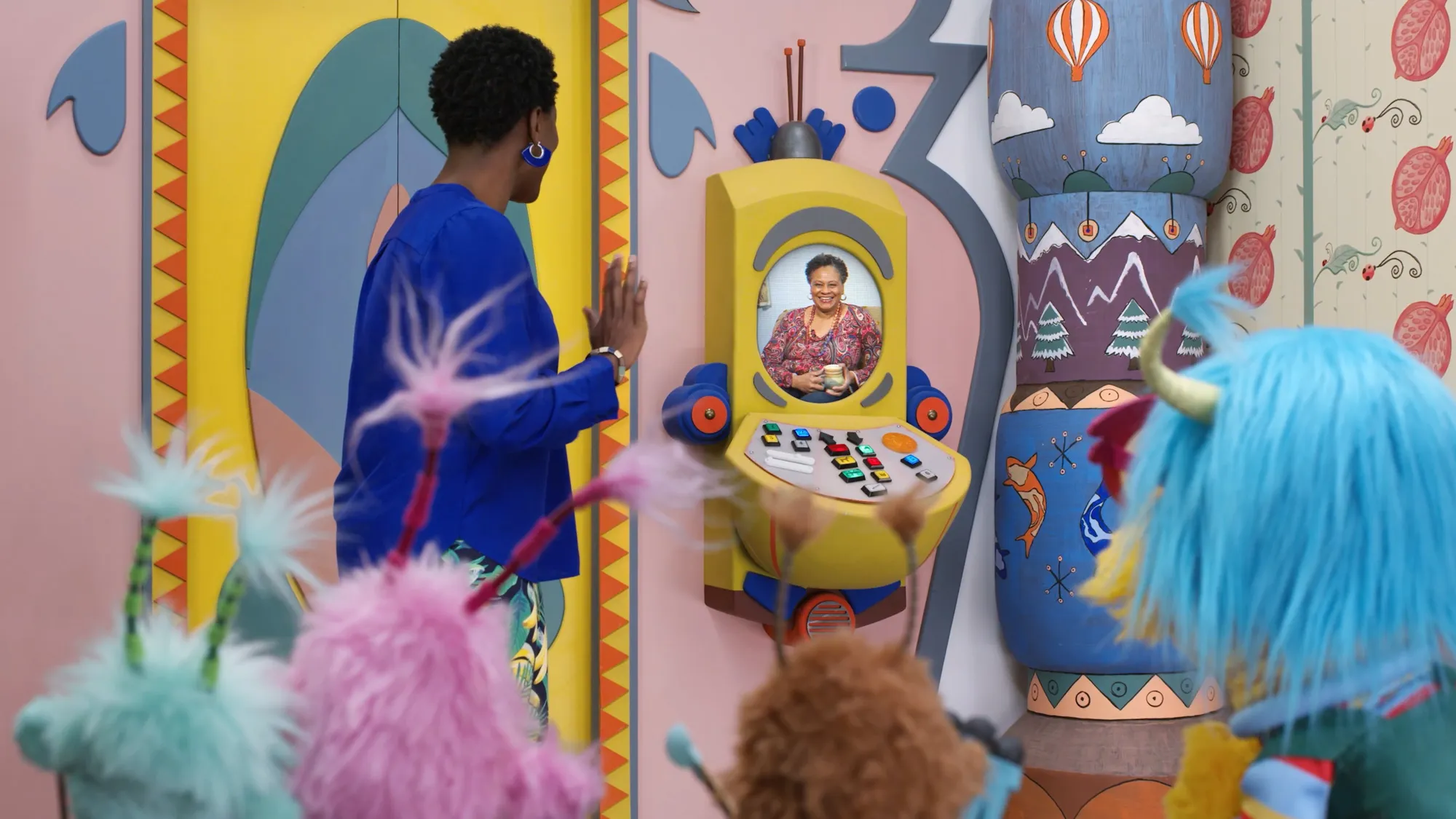
Design for puppetry
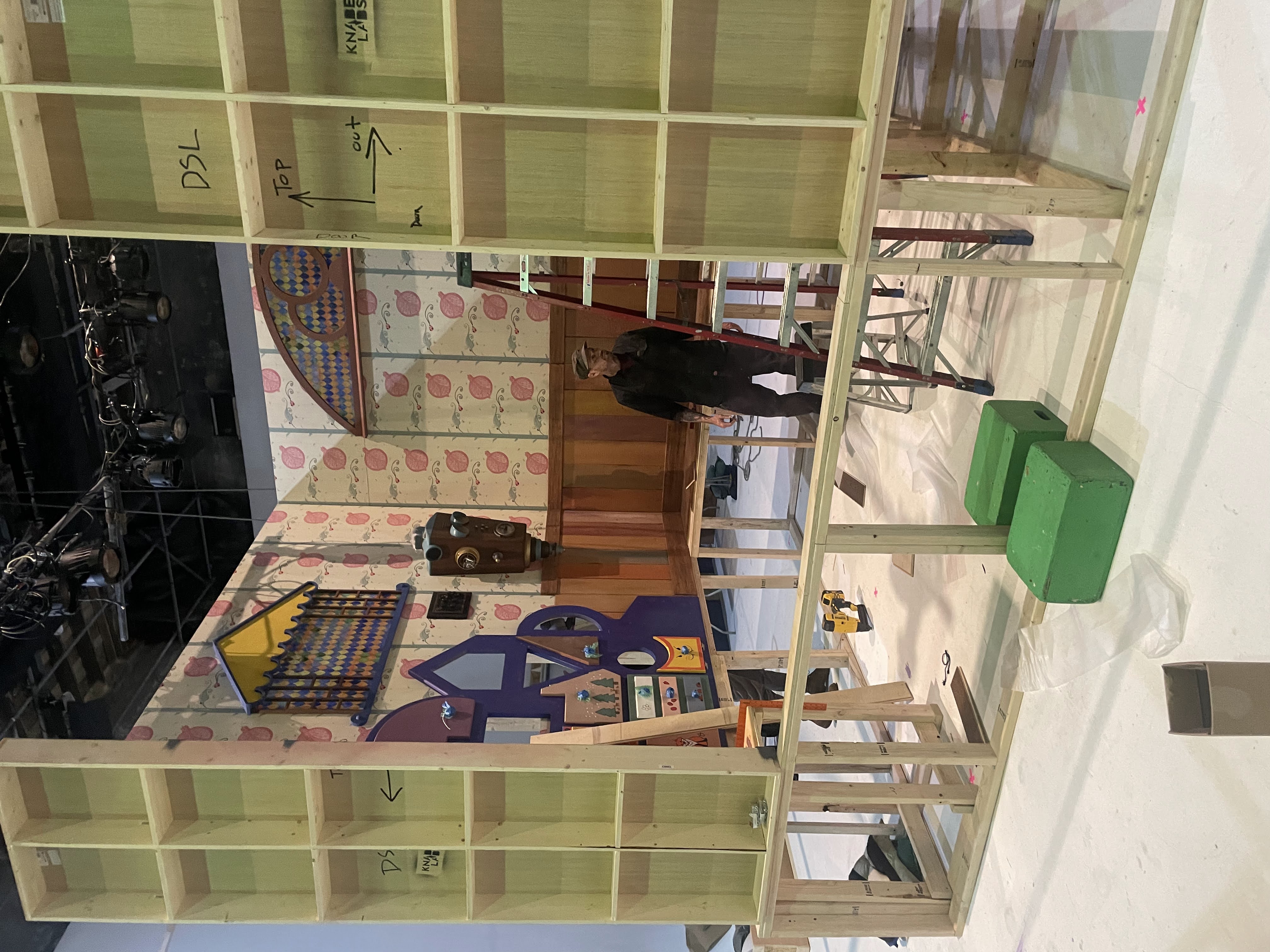
The set sits raised off the studio floor. That single constraint shapes everything else. Puppeteers needed to work under and around the set without breaking the camera angle, so bench heights, shelf depths, wall heights, and practical-light placement were all dimensioned with that in mind. The result reads as a believable child’s-eye interior on screen while leaving room for the people running the show below.
The walls are modular. Four wall sections, each one removable to open up a new camera angle. Any two can come out at once and the remaining structure still stands on its own. No bracing in shot, no rebuild between setups.
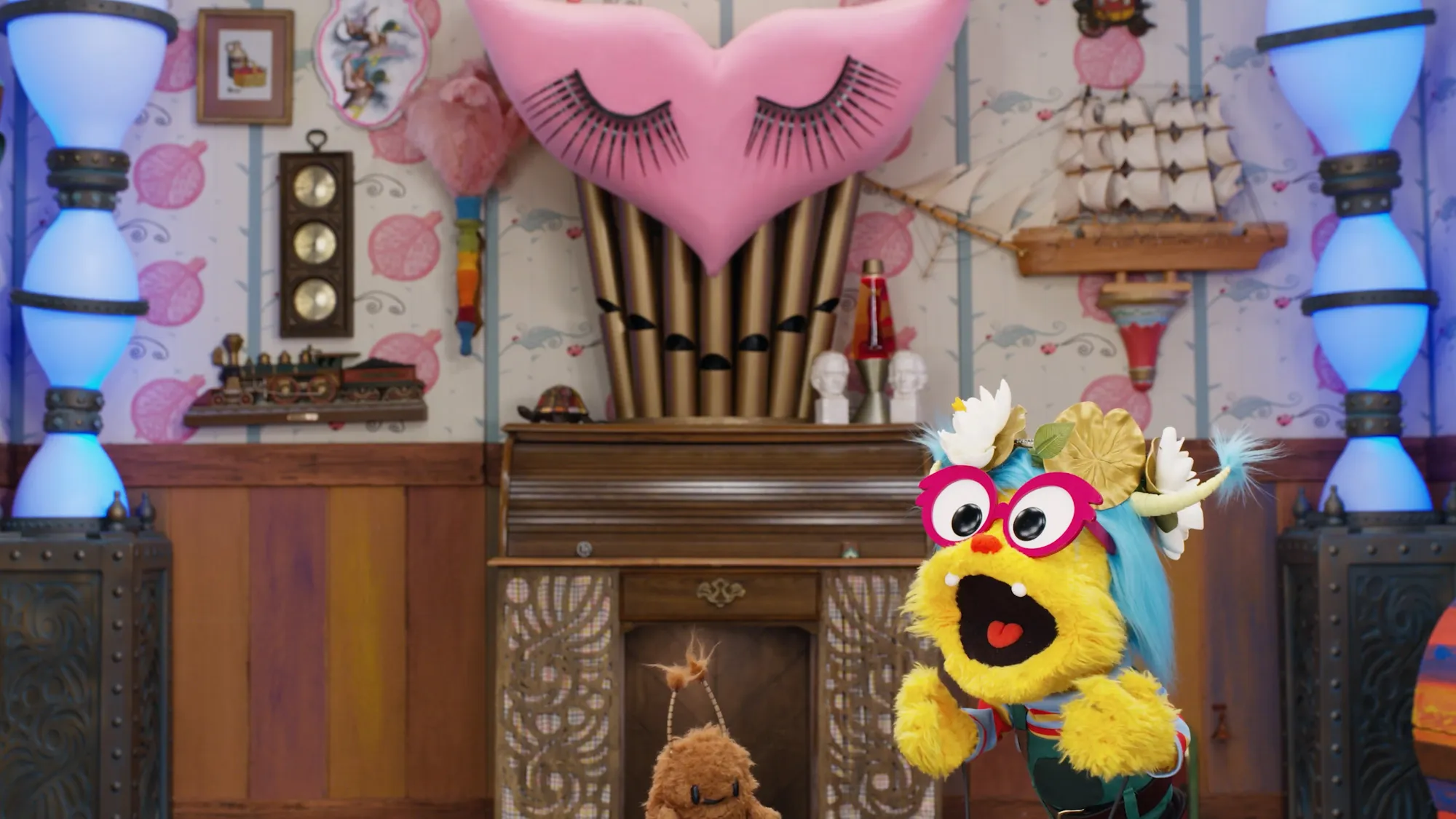
Integrated lighting in the furniture
Several pieces in the set have lighting built into them, not added on top. The translucent columns flanking the organ glow from the inside. Other fixtures around the room carry their own practical light. We specified the lighting during design rather than rigging it in later, so it reads as part of the set’s character instead of wash from off-camera fixtures.
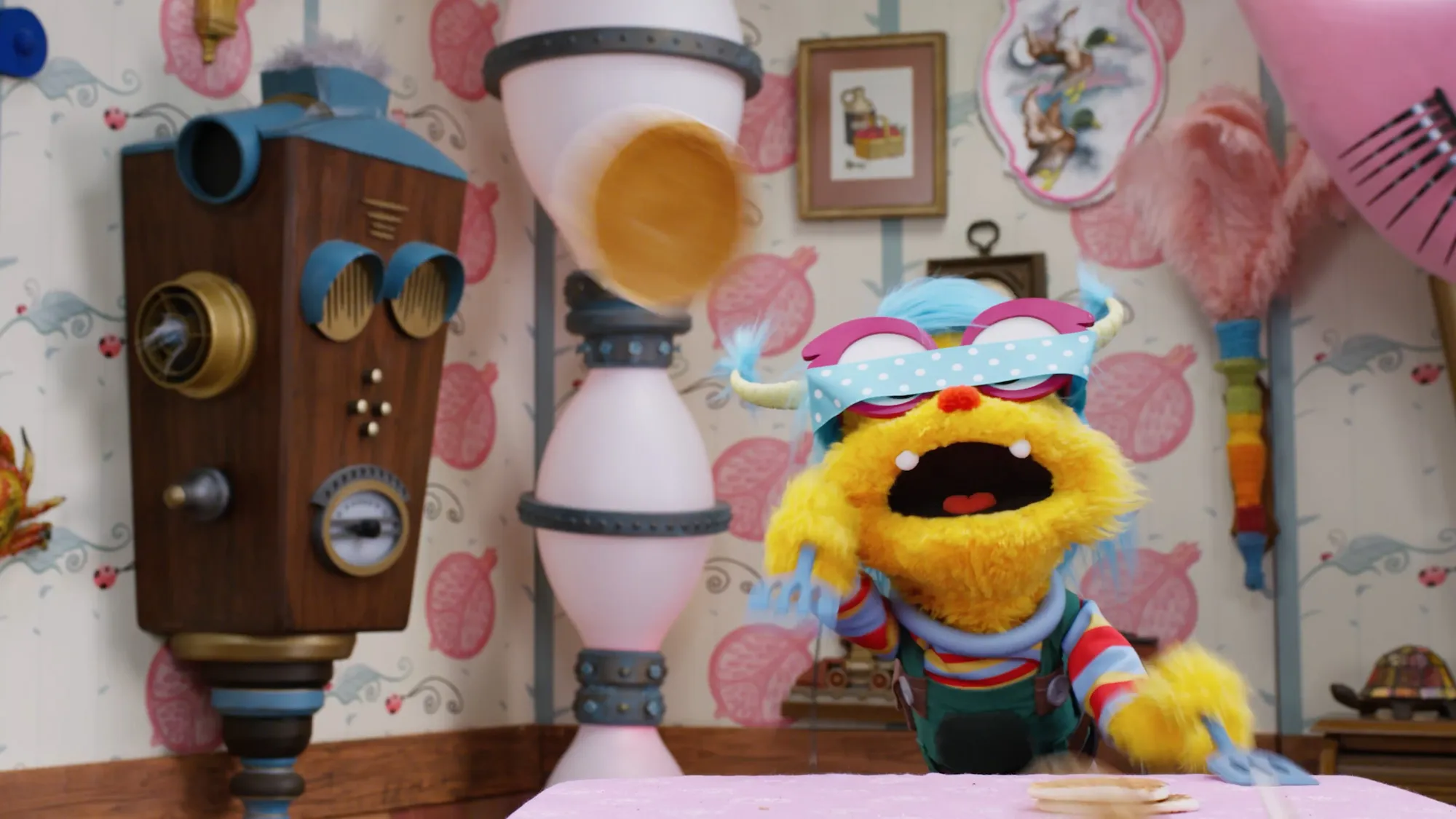
Character design and fabrication
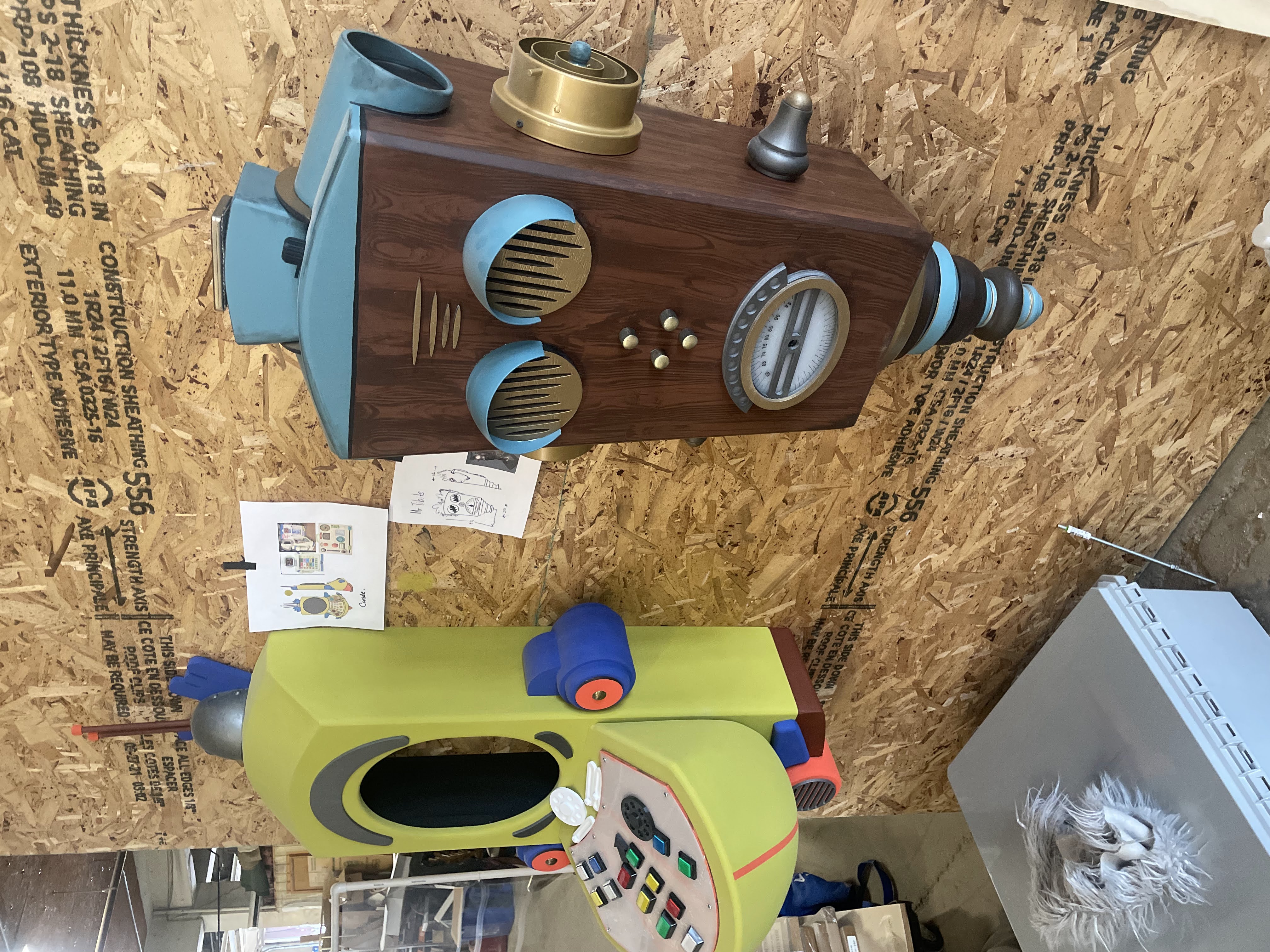
We designed and fabricated several of the show’s characters alongside the set. Big Howl handled the artistic direction and feedback. We translated puppet design into builds that would hold up under daily on-set use.
Built in the shop
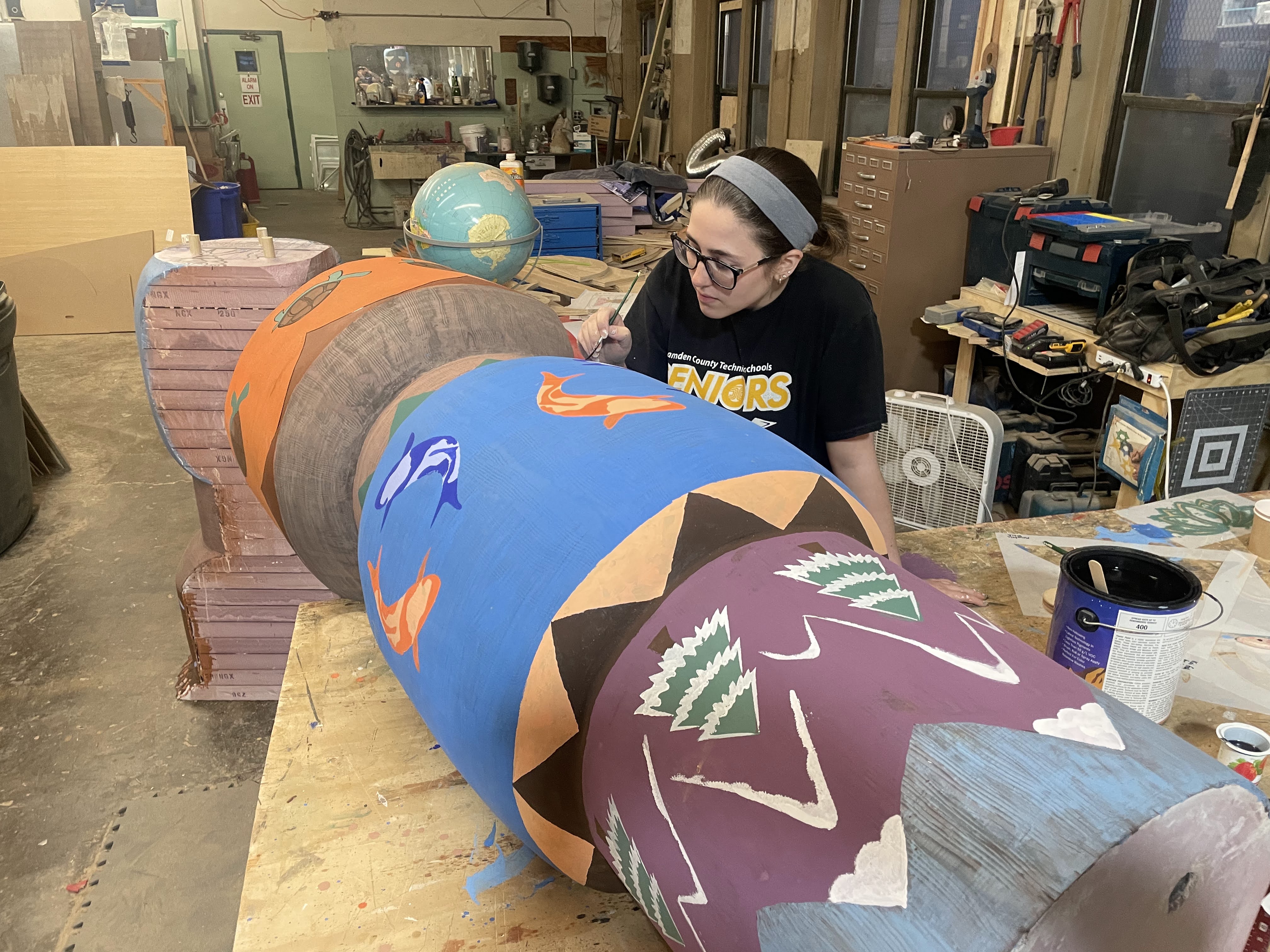
Set pieces came together in our fabrication network’s shops before they ever reached the studio. The vintage intercom panel, the hand-painted columns, the lit fixtures. Each piece was built and finished by hand, then shipped and assembled on site.
On-site across seasons
Designing and fabricating is one phase. Installation is its own job. ITW handled the install for multiple seasons, which meant adjusting the set as the show evolved and the production learned what worked. Same team from sketch through every season’s setup.
Recognition
The show went on to win an Emmy and a NETA Public Media Award.